
Nov 19, 2024 | Pool Fill-In Education
Many homeowners who choose to fill in their pools often wonder if they can build on top of the newly reclaimed space. Whether you’re considering a garden, patio, or even an extension of your home, understanding the complexities involved is crucial for a successful project.
The short answer is: yes indeed you can build over a filled-in pool. But you need to remember that over time, everything has a tendency to shift and move, especially in our dynamic climate in Ontario. If you intend to build a structure on top of the filled-in pool, you will still need to adhere to the foundational requirements for that structure, just as if you were building on regular ground.
Having said that, with proper planning, and a clear understanding of the structural requirements for what you intend to build, it is possible.
Types of Structures Suitable for Building Over a Filled-In Pool
Lightweight Structures
- Sod lawns: This is probably the most common application for outdoor pool removals. Most of our customers will decide to make their pool areas into beautiful green lawns.
- Patios and Decks: These are also great for filled-in pool areas as they exert less pressure on the ground.
- Gardens and Landscaping: Planting gardens or creating landscaping features are excellent ways to repurpose the space.
Heavier Structures
Building Additions: Constructing rooms, garages, or other heavy structures requires more thorough preparation and potentially professional engineering advice. The reality is, even with professional-grade compacted, clean fill-in materials like what we use at TPFIP, where will always be additional settling and shifting, especially if the pool enclosure had sustained any damage prior to fill-in.
Foundations: Ensure that any heavy structure has a proper foundation that extends beyond the filled-in area to stable ground.
If you intend to build a heavier structure over your filled-in pool area, you should hire a geotechnical engineer to evaluate the stability of the space. You may also want to conduct soil tests to determine the load-bearing capacity and identify any issues that need addressing. Everyone’s situation is different—sometimes you’re dealing with a backyard of clay, soil, sand, or a mixture of these and other things.
Permits and Regulations
When planning to build over filled-in pools, it is essential to check with your local municipality regarding specific building codes and regulations that may apply. Additionally, make sure to obtain all necessary permits before starting any construction to ensure compliance with local laws.
Construction Considerations
When starting a construction project over a pool fill-in, it’s crucial to prioritize foundational aspects to ensure long-term stability. Key considerations include extending foundations and using pilings for heavy structures, implementing effective drainage solutions to prevent water accumulation, and ensuring proper soil compaction to avoid settling issues. This section highlights these essential construction factors for creating a durable and safe structure.
Foundation Requirements
- Extended Foundations: For heavier structures, foundations should extend beyond the filled-in area to undisturbed soil for added stability.
- Piling: In some cases, pilings might be necessary to ensure stability.
Drainage Solutions
- Proper Drainage: Implement effective drainage solutions to prevent water accumulation, which can compromise the stability of the filled-in area.
- Grading: Ensure the site is properly graded to direct water away from the structure.
Compaction and Soil Stability
Ensuring the soil is properly compacted during the fill-in process is critical to avoid future settling issues. The Pool Fill-In People uses properly compacted soil that assists with minimal settling and shifting. Even so, as stated earlier, climate conditions and other factors can cause any foundation to shift and move. Just be mindful of this if you plan to build a structure that needs additional reinforcement as a proper foundation.
Benefits and Drawbacks

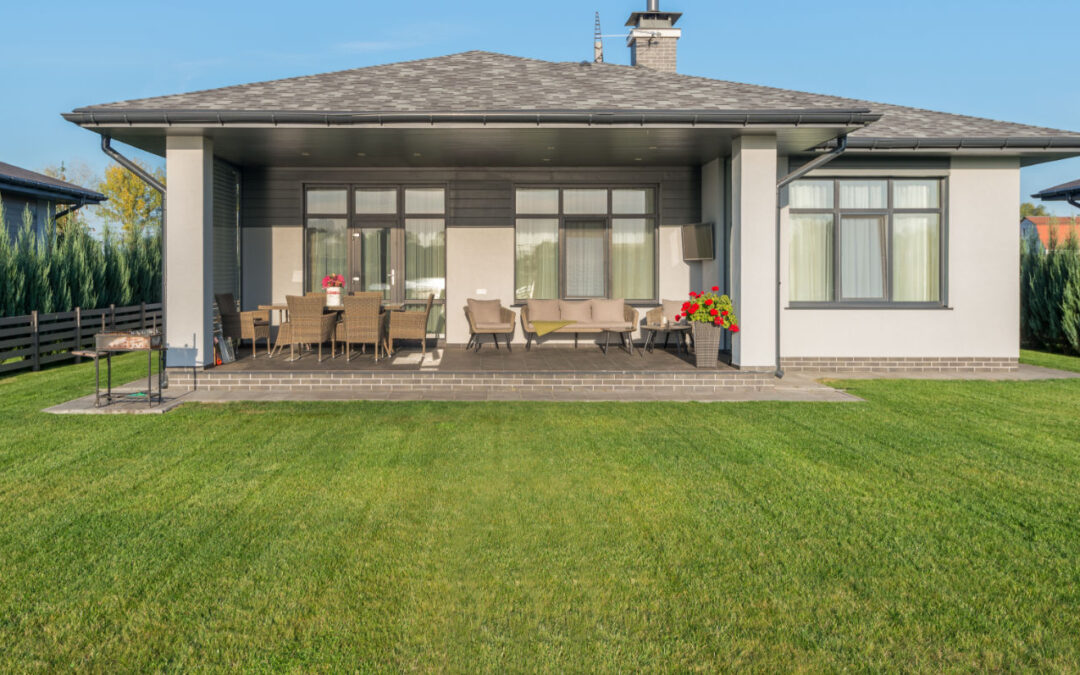
Sod lawns are probably the most common application for outdoor pool removals.
Building over a filled-in pool presents several advantages, notably maximizing space. This approach allows homeowners to reclaim and repurpose valuable outdoor areas that might have otherwise gone unused. Additionally, adding structures or features can not only enhance the functionality of your property but also increase its overall value, making it a worthwhile investment.
However, there are some drawbacks to consider. One significant concern is the potential for settling issues, particularly if the pool has not been properly filled in. Such settling can undermine the integrity of any new structures built on top. To mitigate this risk, it’s essential to collaborate with experts like The Pool Fill-In People, who utilize the right materials and ensure the project is set up correctly from the start. Moreover, while enhancing your outdoor space can be beneficial, it’s important to be aware that ensuring stability and obtaining the necessary permits may lead to additional costs in the overall project budget.
Building over a filled-in pool is possible with careful planning and professional guidance. Homeowners can successfully repurpose their pool area into valuable, functional space by ensuring proper compaction, conducting thorough assessments, and adhering to local regulations. For expert advice and assistance with pool fill-ins, contact The Pool Fill-In People today!
Feb 20, 2024 | Pool Fill-In Education
Swimming pools can provide hours of fun and relaxation during the summer months, but they can also be a source of stress and expense for homeowners. If you’re tired of maintaining your pool or if you’re looking to reclaim valuable yard space, pool removal may be the solution you’ve been seeking. In this post, we’ll explore the benefits of pool removal and why it’s an excellent investment for homeowners.
Increased Property Value
Filling in your swimming pool can boost your property value in several ways. For one, it eliminates the potential liability of a swimming pool on your property, and makes your home more attractive to potential buyers. It also provides more space for landscaping and other outdoor amenities, which can increase your property’s aesthetic appeal and functionality. Homeowners who fill in their swimming pools often see a significant increase in their home’s resale value, making it an excellent investment for the future.
Cost Savings
Maintaining a swimming pool can be expensive, especially if you’re not using it regularly. Chemicals, electricity, and water costs can quickly add up, not to mention the cost of repairs and replacements. Filling in your swimming pool can save you money in the long run by eliminating these ongoing expenses. You’ll also avoid potential repairs, which can be costly if you’re dealing with leaks or other structural issues.
Improved Safety
Swimming pools can be dangerous, especially if you have children or pets. By filling in your swimming pool, you’ll eliminate the risk of accidents, injuries, and drownings on your property. This can provide peace of mind and a safer environment for your family and guests.
Enhanced Outdoor Space
If you’re not using your swimming pool, it’s essentially wasted space. By filling in your swimming pool, you can reclaim that valuable outdoor space and transform it into something that better suits your needs. Whether you want to create a garden, a patio, or a new outdoor living space, the possibilities are endless when you have more land to work with.
Environmental Benefits
Swimming pools require a significant amount of water, energy, and chemicals to maintain, which can be harmful to the environment. By filling in your swimming pool, you’ll reduce your water usage, energy consumption, and chemical runoff, which can have a positive impact on the environment. This can be a great selling point for eco-conscious homeowners who are looking to reduce their environmental footprint.
Filling in your swimming pool can provide numerous benefits, including increased property value, cost savings, improved safety, enhanced outdoor space, and environmental benefits. If you’re ready to take the plunge and reclaim your backyard, our team at The Pool Fill-In People can help. We specialize in professional pool removal and fill-in services, and we’re committed to providing quality workmanship and exceptional customer service.
Contact us today to learn more about our services and how we can help you achieve your backyard goals.

Aug 11, 2020 | Pool Fill-In Education
Are you considering buying a house with a pool and want to know if it’s a smart investment? Maybe you already have a pool and are having second thoughts about keeping it.
“Pools are great in theory, but there can be hidden downsides that lead to a pool being more of a headache than a relaxing haven.”
An in ground pool can seem like the ultimate luxury, and to some, it certainly is, but a pool is just a pain if it’s:
- in need of repair
- requires extensive maintenance
- is taking up space that could be better suited for something else
There are many benefits to a pool—no one is likely to argue that. But there are just as many drawbacks, if not more so, that should be carefully considered. Let’s take a closer look at some of the biggest cons of owning a pool to investigate whether or not removing or filling in your pool makes financial sense in your case…
Cons of Owning a Pool
Heating and water costs can be expensive. Running a pool heater costs $150 – $800 per month depending on various factors, like the temperature, humidity, and average wind speeds.
The most common types of swimming pool heaters use propane, natural gas, or electricity as their fuel source, and each has its benefits. Gas heaters cost less up front but more over time.
Conversely, electric heat pumps are more expensive up front but are cheaper to run over time.
Energy Star estimates that it costs about $2,000 to heat a 1,000 sq. ft. pool in the GTA to 78 degrees (average temperature recommended by International Code Council) between May 1st to September 30th—the five warmest months of the year when a pool is most often utilized. In this circumstance, that equates to roughly $400/month to heat a pool that size.
Energy Star estimates that for every one-degree increase in pool temperature, energy consumption increases by 10% – 30%.
A good-quality pool cover can help reduce pool heat loss by 50% or more depending on where you live and can also reduce evaporation.
Pool maintenance can be a hassle
There are rules to owning a pool. No, not the “Pool Rules” you’re used to seeing on the side of a public pool. There are codes put in place to keep people and the environment safe. These pool regulations require up-to-date and operational equipment, code-compliant drain covers, pool barriers, etc.
The cost of these various components can be more than some people are prepared to take on, and they can add up especially quickly in the case of an old, outdated pool. Learn more about swimming pool codes: 2018 International Swimming Pool and Spa Code
Water evaporation is something to consider.
The average pool sees ¼ – ½ an inch of water loss per day due to evaporation. This equates to about 2 – 4 inches of water per week. A typical-sized pool loses roughly 25,000 – 50,000 gallons of water per year due to evaporation alone. If you live in a particularly hot and/or dry area, expect evaporation to happen even more quickly. The same can be said for windy environments as well.
“First-time pool owners may think their pool has a leak when they discover how quickly evaporation depletes the water level. Depending on where you live, it’ll be necessary to top off the water level every week or so to keep it from getting too low.”
Not only is refilling your pool a pain, but it’s also a strain on your wallet and the environment. Another sneakier downside of evaporation is its effect on the pool’s water temperature. One of the biggest culprits of energy loss (i.e. heat loss) is evaporation.
If you add a pool cover, you can reduce the amount of heat loss that occurs from evaporation, and you’ll notice significant savings.
Insurance coverage may need to be increased
In the insurance business, swimming pools are the most commonly cited example of an “attractive nuisance,” or anything that might simultaneously attract and endanger an unsupervised child.
Other examples of common “attractive nuisances” are trampolines and man-made ponds.
Because of this title, pool owners are responsible for taking proper measures to protect unsuspecting children from the potential danger of an attractive nuisance, like a pool. This could include installing a fence around the pool’s perimeter, using a safety cover when the pool is not being used, and having easy-to-access safety equipment nearby. Even when taking reasonable precautionary measures, you may still want to consider increasing your homeowner’s insurance coverage and limits.
This will, in turn, result in a higher annual premium.
When it comes to homes with pools, insurance companies recommend increasing liability coverage from $100,000 to $500,000.
This could increase your monthly bill $65 – $135 depending on rates where you live. Speak with your insurance company to see which coverages are preferred in your situation.
Pros of Owning a Pool
Fun in the sun. Everyone can likely agree that a pool that is in good condition is a fun place to be!
Taking a swim with friends and family is a great way to spend warm months out of the year. Keeping a pool makes financial sense in certain situations. A pool only makes financial sense if all circumstances are right when it comes time to sell. In a perfect scenario, a pool will increase a home’s value by an average of 7%.
Some examples of a “perfect pool scenario” include:
You live in a higher-end neighborhood and most of your neighbors have pools. (In this case, not having a pool might make your home harder to sell.)
- You live in a warm climate, such as Florida or Hawaii.
- Your property is big enough to accommodate a pool and still have some space left over.
- The style of the pool fits the neighborhood.
- The pool is well-maintained and in good condition.
- The pool is not too old or out of date.
- You can attract the right buyer. (Couples with very young children may not be interested in homes with pools because of potential safety issues, but an older, childless couple, or a family with kids who can swim, may fall in love with it.)
Pros of Removing a Pool
- You save time and money on swimming pool maintenance.
- You have more yard space for other activities or landscaping opportunities.
- You no longer have the additional hazards and liabilities that come with pool ownership.
- If you sell your house, it may increase the number of potential buyers and make your home easier to sell.
- If you have young children, removing your pool eliminates the potential safety hazards associated with pool ownership.
Cons of Removing a Pool
